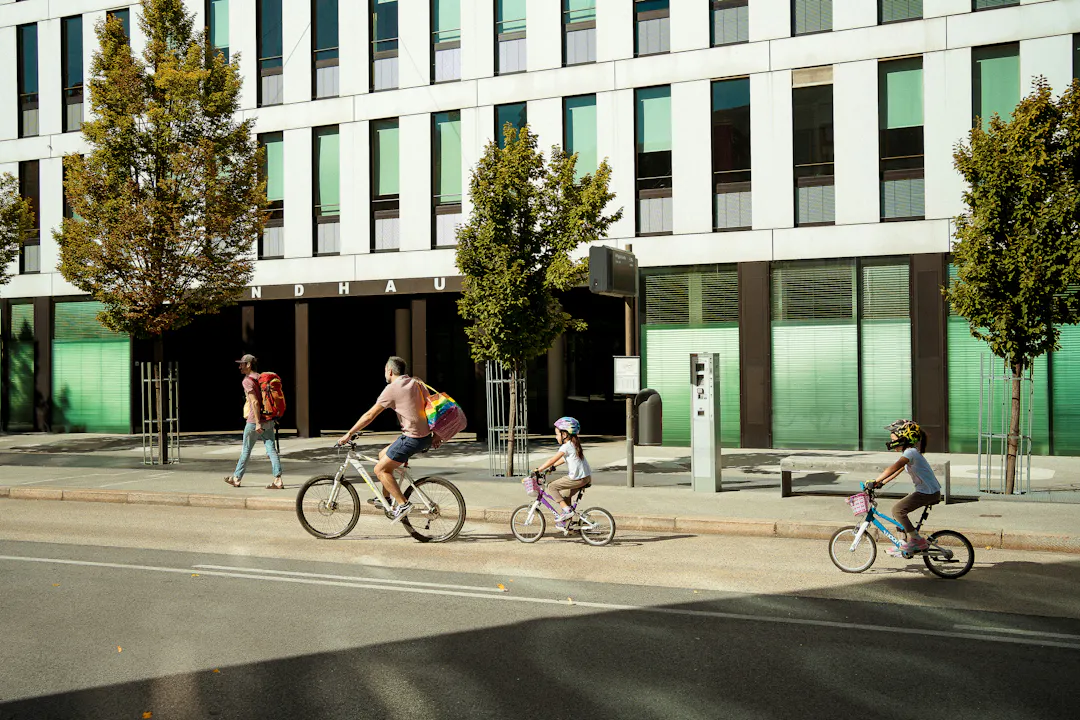
We would like your feedback on our draft Air Quality Action Plan 2026–2031.
What is the Air Quality Action Plan
The Air Quality Action Plan (AQAP) sets out what we propose to do over the next five years to reduce air pollution from traffic and other sources, and to protect people’s health.
It was originally produced in 2020 and is currently being reviewed as part of our statutory duties under the Local Air Quality Management framework.
The Air Quality Action Plan includes policies and plans on both the national and local level and explains how other policies and plans support the AQAP.
Why do we need an Air Quality Action Plan
Thanks to improvements over the past few years, largely due to the increase in lower emission vehicles on our roads, we no longer exceed any of the National Air Quality Objectives in Derby. However, we still need to reduce concentrations of air pollutants in order to meet current DEFRA Statutory Guidance and to improve the health and quality of life for people in Derby.
Current Statutory Guidance states that we need to be at least 10% below the National AQ Objectives for a period of 3 years or more, before we can consider removing our last remaining Air Quality Management Area. This area covers parts of the ring road around Derby. You can see the map here.
Air pollution is associated with a number of negative health impacts and is recognised as a contributing factor in the onset of heart disease and cancer. Air pollution particularly affects the most vulnerable in society: children and older people, and those with heart and lung conditions. There is also often a strong link with equalities issues, because areas with poor air quality are also often the less affluent areas.
According to DEFRA, the annual health cost to society of the impacts of air pollution in the UK is estimated to be around £27 billion (but could be as high as £50 billion).
The plan will help us to identify where we need to focus attention and how we will work to improve the quality of air in Derby.
We have developed actions that can be considered under seven broad topics:
- Promoting active travel
- Promoting public transport
- Promoting transport improvements
- Air quality management
- Domestic heating
- Supporting local plans
- Fleet upgrade
How was the draft Air Quality Action Plan developed?
We have worked with other local authorities, agencies, businesses and the local community to improve local air quality and to develop this review of the Air Quality Action Plan.
The Environment Act (1995 and 2021) requires local authorities to consult with the Secretary of State, the Environment Agency, the highways authority, all neighbouring local authorities, other public authorities such as Public Health officials and bodies that represent local business interests and other appropriate organisations.
We have regularly reviewed the ambient air quality in the city since 2000 (as required by the Environment Act (1995 and 2021)) and worked towards identifying areas within the city where concentrations of six pollutants identified by National Air Quality Objectives are exceeding target limit values.
Each year, we report on the last 12 months of data and our ongoing actions to improve air quality, in our Annual Status Report (ASR), which is submitted to DEFRA annually. All of our ASRs are available online on the Derby City Council website.
What are we proposing?
Derby City Council is committed to reducing the exposure of people in Derby to poor air quality, in order to improve health.
As well as reporting on the range of ongoing measures we have been implementing over the past 5 years, we have developed some scenarios using ‘source apportionment modelling’ in order to better understand the potential impact that further changes could bring about.
Source apportionment modelling considers the different sources of pollution at a particular location and tries to estimate how much pollution is contributed by each source. This helps us to target measures at the things that are driving the pollution in that area. When considering nitrogen dioxide (NO2) next to a road, the main sources are generally the different types of road traffic that use that section of road, for example cars, buses, vans and HGVs, which are also split into fuel types.
The chosen scenarios were formed by an assessment of the key sources of pollution in Derby which identified emissions from cars, especially diesel cars, light vans and in some areas buses, as key contributors.
The scenarios have been produced for illustrative purposes and to assist in targeting action towards things that will achieve the greatest air quality benefits. It is important to note that they are not specific policy actions.
How can I take part?
You can take part by:
The survey is open for 12 weeks and closes at 1pm on Thursday 24 December
If you have any questions or would like this consultation in an alternative format please contact environmental.services@derby.gov.uk